
Storm Safety
Storm Tree Damage in Abilene: What to Do First
Use this safety-first checklist after storm tree damage in Abilene, from power-line hazards and hanging limbs to photos and professional review.
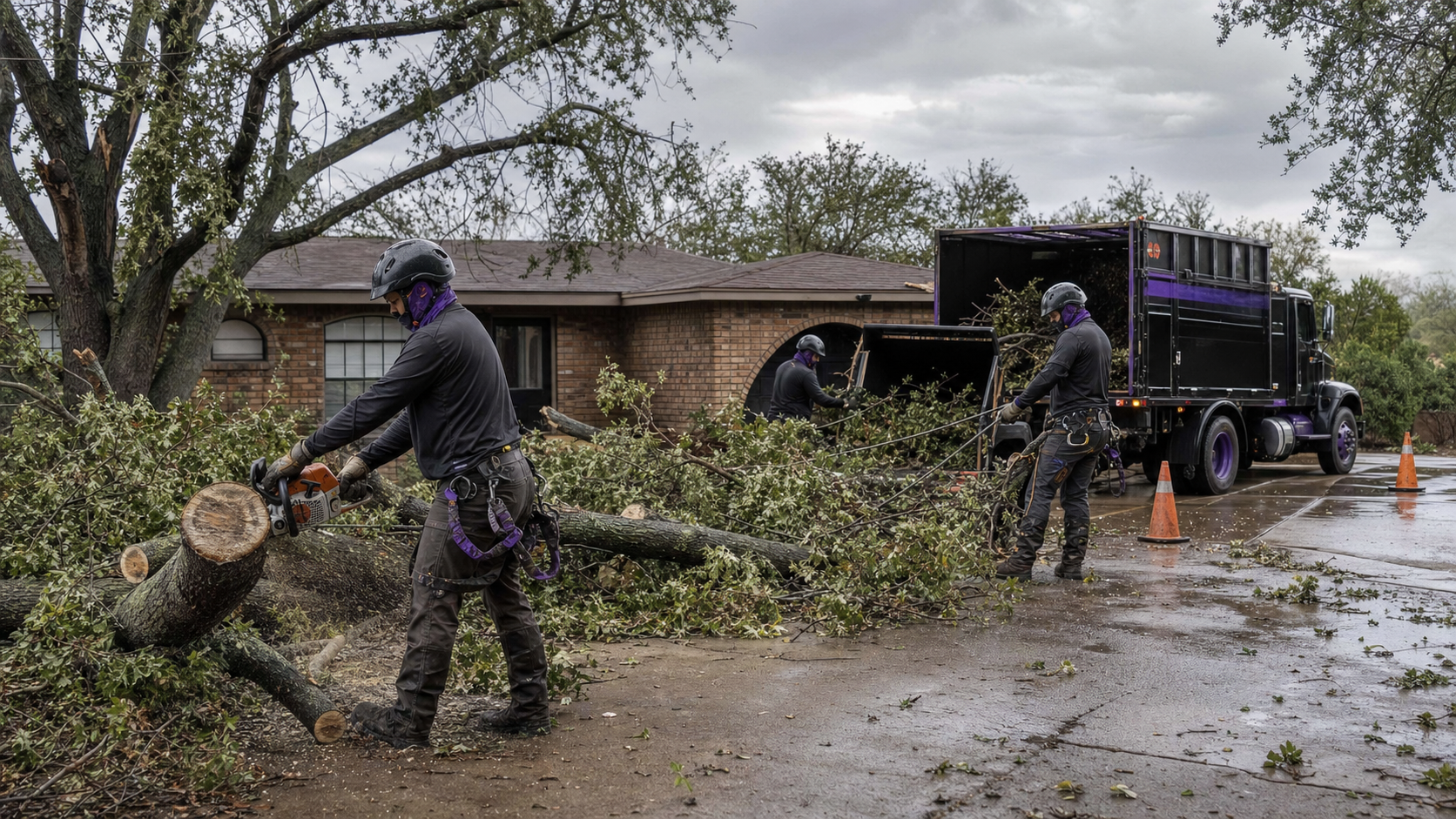
After wind, hail, or heavy rain moves through Abilene and the Big Country, a damaged tree can look like a cleanup project before it is safe to approach. A limb may be suspended in the canopy, a trunk may have opened along a union, or a fallen branch may conceal a utility line. The first task is therefore not cutting or dragging debris. It is keeping people out of the affected area while you identify hazards from a protected viewpoint.
This guide provides an order of operations for homeowners. It does not determine whether a tree is safe, whether it can recover, or whether it should be removed. Those decisions depend on the tree, the damage, and what could be struck if part of it moved. Use the observations below to protect the site, contact the proper authority, and prepare a useful request for professional review.
Wait for conditions to settle before inspecting
Follow local weather and emergency instructions, and do not begin a yard inspection while lightning, strong wind, flooding, or falling debris remains a concern. Start from inside the home, a vehicle, or another protected location. Look across the entire property rather than focusing only on the largest fallen limb. Storm damage can leave smaller branches lodged overhead, trunks under tension, and debris hiding unstable ground.
Keep children, visitors, and pets away from the work area. Do not stand beneath a broken branch to photograph it, climb onto a roof, or walk between a leaning tree and the object toward which it leans. If movement, cracking sounds, or additional falling material is apparent, increase the distance and leave the area undisturbed for trained personnel to evaluate.
Treat utility involvement as a separate hazard
Assume every downed line is energized. Do not touch a tree, branch, fence, vehicle, puddle, or other object that is touching or close to a fallen conductor. A line can be difficult to see beneath leaves, and electricity can travel through materials beyond the point where the line first landed. Keep everyone away and report the condition to the electric utility; call 911 when there is an immediate threat to life or safety.
Utility clearance comes before tree cleanup. Do not try to lift a branch off a line, drive across a line, or decide from its appearance that the line is inactive. If AEP Texas is the property's electric utility, its safety-hazard channel specifically accepts reports of downed wires and trees on power lines. Otherwise, use the emergency reporting channel for the utility shown on the property's electric bill.
Create a no-entry zone around overhead and loaded wood
A broken limb caught in another branch can fall without a person touching it. A bent branch, split trunk, or tree resting on a roof can also store force and shift when cut. Give hanging material and the area beneath it a wide berth. Avoid moving the smaller pieces around its base because those pieces may be supporting other debris or may draw you into the drop zone.
Texas A&M Forest Service advises homeowners not to take on large broken or hanging limbs, climbing, or overhead chainsaw work. A chainsaw does not make storm debris predictable, and a ladder adds another fall exposure. Ground-level twigs outside every hazard area can wait; opening a driveway or tidying the yard is not worth entering a space where wood, lines, or structures may move.
Document the scene without entering it
From safe positions, take wide photos that show the entire tree, the trunk base, surrounding canopy, and whatever the tree or limb is resting on. Add views of the driveway, alley, gate, fence, roof, shed, or vehicle that affects access. A close-up of torn wood is useful only when it can be taken without standing beneath damage or stepping near a line.
Write down what changed during the storm, when it was first noticed, and whether a doorway, driveway, gate, or other necessary route is blocked. Note utility involvement first. Then describe visible splits, hanging pieces, uprooted soil, or contact with a structure without labeling the cause or condition. Clear observations are more useful than attempting a diagnosis from bark color, leaf loss, or a single photo.
Separate immediate cleanup from the tree's longer-term plan
Storm damage does not automatically mean a whole tree must be removed. Texas A&M Forest Service notes that some trees can recover and cautions against hasty removal and excessive pruning. At the same time, the amount of crown loss, large wounds, splits, root movement, and nearby targets can make a professional assessment important. Avoid topping or stripping healthy branches in an attempt to make the canopy look balanced.
Ask for the proposed work to distinguish debris cleanup from later pruning, removal, stump work, and material hauling. Confirm which limbs or tree are included, how the crew will reach the site, and what will happen to logs and chips. No storm-response time should be assumed until availability and a scope are confirmed, so keep utility and public-safety reporting separate from a tree-service request.
Common questions
Answers before you make the call.
Can I cut a storm-damaged limb that is already on the ground?
Only consider ordinary ground debris after you have ruled out overhead limbs, utility contact, unstable trees, loaded wood, damaged structures, and unsafe footing. Large, tensioned, or entangled material should be left for trained tree workers.
Does a split or bare-looking tree always need removal?
No single visible sign answers that question. The location and extent of damage, remaining structure, tree condition, and nearby people or property all matter. A qualified professional may need to inspect the tree before recommending pruning, monitoring, or removal.
What should I send with a storm-cleanup request?
Send the address, safe-distance wide photos, what fell or broke, what it is resting on, any blocked access, and photos of the route into the work area. Report utility hazards to the utility before requesting tree cleanup.
Primary references
Sources behind this guide.
Official and industry sources support the guidance above. Site conditions still require project-specific review.
Local service information
Near Abilene?
Review availability and property considerations in these nearby communities.
View all service areas